
Upcoming Events
Be the first to know about upcoming events by subscribing to our newsletter, the Grounded Gazette.

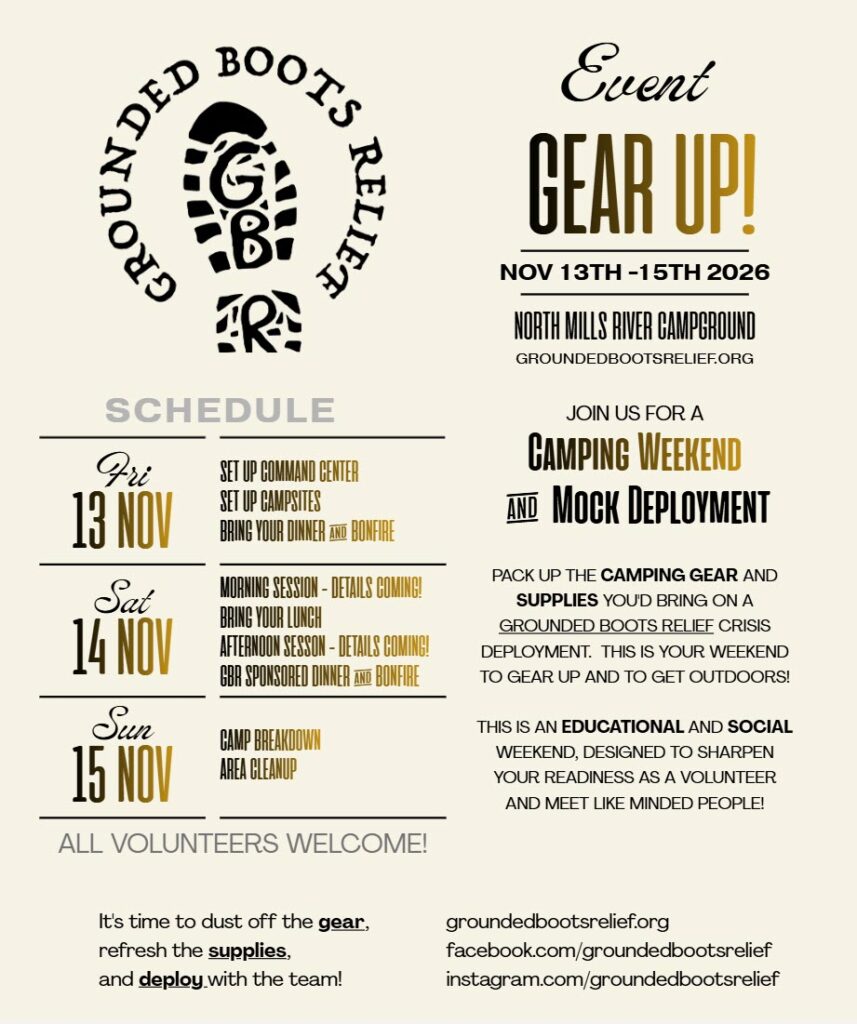
GBR Gear Up Event! November 13–15, 2026
Camping Weekend & Mock Deployment
Register for Gear Up! Event:
https://www.zeffy.com/en-US/ticketing/gbr-gear-up-camping-weekend-and-mock-deployment
Dust off your Gear, refresh your Supplies, Deploy with the Team
All volunteers are urged to attend!
Pack up the camping gear and supplies you’d bring on a Grounded Boots Relief crisis deployment. This is your weekend to gear up and to get outdoors!
This is an educational and social weekend, designed to sharpen your readiness as a volunteer and meet like-minded people!
North Mills River Campground
5119 N. Mills River Road
Mills River, NC 28742
Potable water, restrooms, and parking are available at the campground.
https://www.fs.usda.gov/r08/northcarolina/recreation/north-mills-river-campground
Weekend Schedule (full details are being arranged)
Friday, November 13
- Set up the Operations Center
- Set up campsites
- Bring your own dinner
- Bonfire
Saturday, November 14
- 10:00 AM–12:00 PM: Morning session
- 12:00–1:00 PM: Bring your own lunch
- 1:00–3:00 PM: Afternoon session
- 3:30–5:00 PM: Break
- 5:00 PM: GBR-sponsored dinner and bonfire
- 6:30 PM: GBR Gear Up Event!
Sunday, November 15
- Camp breakdown
- Area cleanup
Mock Deployment Weekend Packing List
Bring the gear and supplies you will use for a typical GBR deployment. Plan for cool weather, wet conditions, and comfortable overnight camping.
Clothing and Personal Sustainment
- Personal food, snacks, and hydration to support you for the duration of the event
- Food, Water, and Cooking Supplies: food/water storage (coolers, dry bags, or airtight bins), portable stove with fuel, cooking/eating utensils, lighter or waterproof matches, water purification backup, biodegradable soap, and wildlife-resistant food storage if needed
- Climate appropriate field clothing (durable pants, long‑sleeve shirts, insulating layers as needed)
- At least two pairs of socks per operational day, plus extra undergarments and pajamas
- Comfortable camp/evening footwear (e.g., sandals, crocs, or similar)
- Sleeping bag, sleeping pad, pillow, and optional lightweight blanket or liner
- Personal hygiene kit: toothbrush, toothpaste, soap, deodorant, wipes, toilet paper, hand sanitizer, hygiene products
- Required prescription medications (minimum 7-day supply), basic OTC medications (pain relief, antidiarrheal, antihistamine)
- Refillable water bottles or hydration bladder plus purification method (tabs/filter) as backup
- Cash in small bills for fuel, tolls, and incidentals
Shelter and Sleep
- Tent, truck, camper, or other sleeping quarters
- Tent rainflies, stakes, ground tarp, and needed setup supplies
- Cool-weather sleeping bag w Sleeping pad or air mattress
- Pillow and extra blanket, sleeping-bag liner, or insulated quilt
- Camp chair and camp furniture
Personal Protective Equipment (PPE)
- Waterproof work boots, preferably steel-toe, broken‑in, and suitable for debris and uneven terrain
- Work gloves (heavy-duty plus a backup pair)
- Weather protection: rain jacket or poncho, hat, sunblock, and insect repellent
- Attached personal first‑aid trauma kit and tourniquet
Communications and Power
- Discord, Avenza Maps, and what3words apps installed
- Compass; GPS unit or GPS-enabled smartphone
- FRS/GMRS handheld radios or other assigned portable radios, with spare batteries
- Fully charged cell phones, with vehicle and wall chargers, charging cables, and power banks
- Headlamps and flashlights with extra batteries; at least one light per team member
- Small AM/FM or NOAA weather radio (hand‑crank or battery-powered) for situational updates
Tools and Miscellaneous Gear
- Flashlight, headlamp, and portable camp lights
- Multi-tool or folding knife; optional small fixed‑blade knife
- Small folding shovel or entrenching tool (if operating in debris or rural areas)
- Duct tape, zip ties, utility cord (paracord) for field repairs and improvised fixes
- Small repair kit for gear (needle and thread, safety pins, spare buckles)
- Backpack or small daypack for each team member to carry personal and mission gear
- Trash bags for personal waste and to pack out debris samples or spoiled materials safely
- Clip-on or pocket-sized hand sanitizer and wipes at the individual level
Field Essentials (items depend on deployment)
- Tape measure (at least 25 ft) for structural and debris measurements
- Digital camera or smartphone camera, with extra storage if needed, for geotagged photos
- Safety glasses or goggles and optional sunglasses for bright conditions
- Hard hat or bump cap where overhead or structural hazards may exist
- High‑visibility safety vest (ANSI-compliant) with reflective striping
- Respiratory protection: N95 or better dust masks/respirators for smoke, dust, and mold
- Hearing protection (earplugs or earmuffs) for noisy environments
Previous Events


